Service
Negative-side waterproofing for basements and lift pits.
When you can't dig from the outside, you waterproof from the inside. Negative-side systems seal the internal face of a structure against hydrostatic pressure — the right answer for basements, lift pits and retaining walls where external access isn't possible.
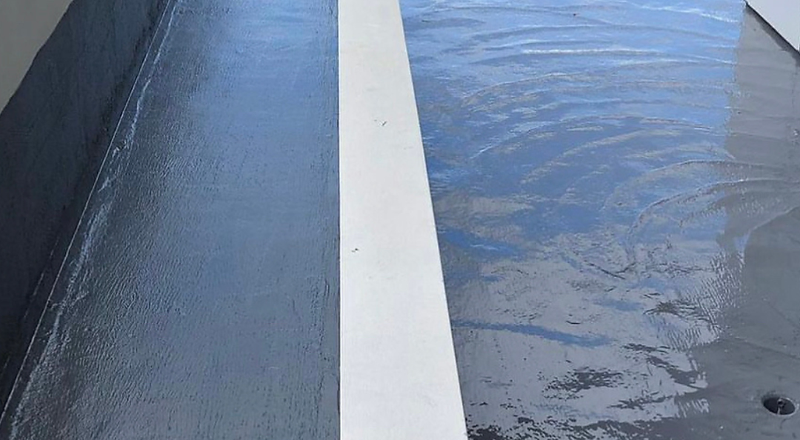
Positive-side waterproofing goes on the outside — the side the water hits first. It's the best approach when you can reach it. But in occupied buildings, the outside of a basement wall is often buried under a neighbouring property, a driveway, or finished landscape. Excavating it is expensive, disruptive, and sometimes impossible.
Negative-side waterproofing works from the inside face. The system bonds to the internal surface of the concrete and resists water pressure pushing through the slab or wall. It won't stop water from entering the concrete itself, but it stops it from entering the occupied space — which is usually the goal.
For strata and commercial buildings on the Gold Coast and Northern Rivers, this is often the only practical option for basement walls, lift pits and retaining walls where external excavation would mean closing a car park, removing landscape, or accessing an easement that doesn't exist.
Where it's used
Basement walls
Inside-face waterproofing for retaining walls where external excavation isn't feasible.
Lift pits
Sealing internal faces against groundwater pressure, protecting elevator electronics.
Car park soffits and walls
Negative-side systems for below-grade structures that can't be excavated from above.
Retaining walls
Inside-face treatment for walls backing onto occupied or landscaped space.
Tanking systems
Cementitious and crystalline tanking bonded to the negative face of concrete.
Paired with PU injection
Combined with injection for joints and cracks that carry active water.
When it's the right call — and when it isn't.
Negative-side waterproofing is the right answer when external access is genuinely impossible, or when the cost of excavation is disproportionate to the problem. If the concrete is severely degraded, the water table is high and sustained, or the structure is still moving, a negative-side membrane alone may not hold — and we'll tell you that before you spend the money.
In many cases the best result is a combined approach: polyurethane injection to seal the active entry points — joints, cracks, penetrations — followed by a negative-side membrane across the broader surface. Each situation gets assessed on its merits.
Tell us about the ingress.
Send a few details and we'll come back within one business day. Active leaks — call us directly.
0431 522 689